Replacing a Potato Patch With Lawn: Our Decision and What to Plan
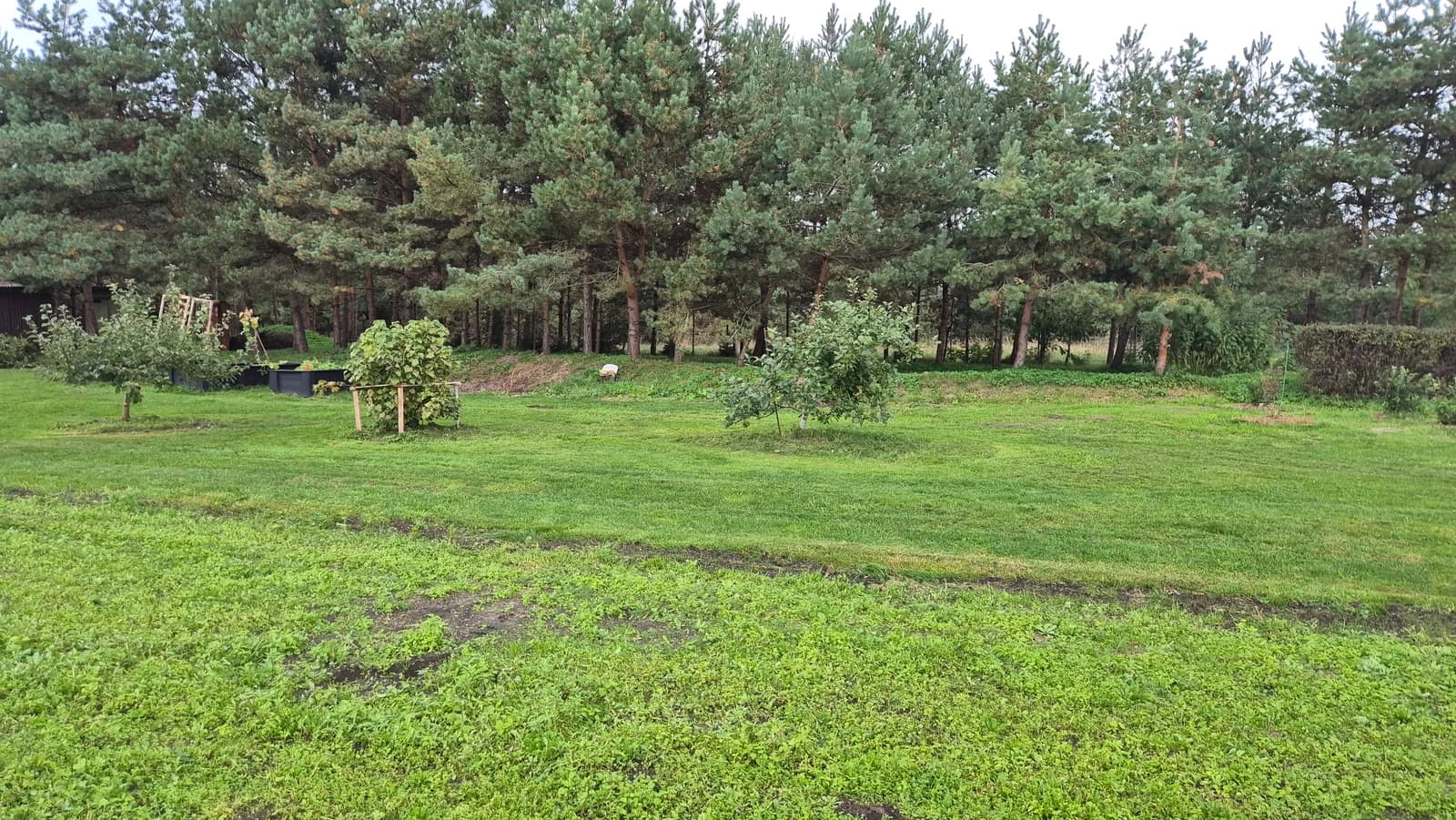
Before turning a potato patch into lawn, decide what you want that space to do. Grass still needs establishment and mowing, while a vegetable plot asks for crop care. The useful choice depends on what your household gets from each and the work you want to keep doing.
Our first season in Latvia helped us make that choice. The existing lawn project turned out well overall. The potato harvest wasn't one of the best, even though we had grandad's tractor to help harvest it. We decided the amount of work wasn't worth another potato season.
We're keeping a growing area, but changing its shape: raised beds and a new greenhouse, with grass replacing the potato growing area.
Decide how much growing space earns its keep
Before repeating a crop, consider the harvest alongside the work and enjoyment it brought. A disappointing crop may justify another attempt if you know what to change; it may also be a reason to use the space differently.
| Option | What you keep | What you need to plan |
|---|---|---|
| Keep the potato plot | Another potato season in the same growing area | Crop preparation, care and harvest |
| Reduce the vegetable area | A smaller growing commitment | Which crops deserve the remaining space |
| Combine grass with beds or a greenhouse | Growing space alongside an area for other garden use | Layout, lawn establishment and ongoing mowing |
We're choosing the third option. The herbs in the raised beds did exceptionally well, and the children loved the wild strawberries planted later. That makes smaller growing spaces worth keeping for us.
This is a household decision rather than a rule about whether potatoes are worth growing.
Settle the layout before sowing
Our new greenhouse is ordered, with delivery expected in November 2026. One of the three raised beds has moved to the former potato area; two still need moving. A robot mower is on the plan for next year.
For a similar project, draw the finished layout before buying grass seed:
- Mark the greenhouse base, its door and the route for bringing materials in.
- Mark the beds and the paths needed to reach them.
- Identify the ground that will actually become lawn.
- Check how you will mow that area and reach its edges.
Finish work that will repeatedly disturb the ground before treating it as a new lawn. The RHS lawn-from-seed guide recommends limiting traffic on newly seeded grass.
Prepare the former growing ground

A harvested plot isn't automatically a finished seedbed. Look for remaining crop regrowth, persistent weeds, stones, hollows and compacted areas.
The RHS preparation guidance describes removing weeds, preparing the soil, allowing it to settle and finishing with a level, firm surface and a fine top layer for sowing. Check the surface again after it settles rather than covering obvious unevenness with seed.
For the sowing rate, suitable seed mix and full sequence, use our grass-seed planting guide.
Arrange watering before the seed goes down
Establishing grass and maintaining an established lawn are different jobs. Young seedlings need moisture while their roots develop.
University of Minnesota Extension recommends light, frequent irrigation during establishment, reducing the frequency as roots grow. Rainfall changes how much watering is needed.
If the garden is a weekend property, decide how that care will happen between visits. Check the hose route, available help and local sowing conditions first. A future robot mower handles cutting; the new lawn still needs a plan for establishment.
What the earlier lawn experiment tells us

Our May notes recorded two approaches on former potato ground:
| Recorded approach | Preparation |
|---|---|
| Geotextile and sand | Clear the surface, lay geotextile, add sand and sow |
| Direct seeding | Level the existing ground a little and sow into it |
The early growth was uneven, with bare areas, crop regrowth and new grass seedlings.

By the end of the season, we were happy with the lawn overall. We don't have a separate final result for each approach, so this experiment doesn't establish a winning method. Follow the standard soil-preparation and sowing guidance when planning a new lawn; the fabric-and-sand experiment is a record of what was tried.
Before starting your own conversion, settle four things: the final layout, the condition of the soil, how seedlings will be watered, and how the finished lawn will be maintained. Those decisions matter well beyond the day you scatter the seed.
Keep reading
More on gardening
Why Is My Grass Not Growing? How to Fix a Slow, Patchy New Lawn
New grass coming up thin or patchy? Here are the real reasons grass seed fails to grow, diagnosed from my own slow lawn, plus how to fix each one.

How to Get Rid of Ants Around the House: Every Method, Tested and Ranked
How to get rid of ants around the house and garden, ranked honestly: the contact powder that cleared my foundation in a week, plus what actually kills the colony.

What is the best fertilizer for roses?
The best fertilizer for roses comes down to nitrogen, phosphorus, and potassium balance. Here's what each nutrient does and how to pick the right feed.