How to Get Rid of Ants Around the House: Every Method, Tested and Ranked

If you searched how to get rid of ants — around the house, in the house, or in the garden — you've probably already found ten articles that all say the same vague things. This one is different in one way: I'll start with the method that actually worked in my own garden this spring, with photos and dates, then give you the honest ranking of every other method, what kills ants and what just moves them around, and how to keep them gone for good.
Quick answer
- For an outdoor nest or ants along the foundation: a contact ant powder sprinkled where they travel is the most reliable thing I've used. It cleared my mounds and trails in about a week.
- For a nest you can see and reach: boiling water poured straight in is free and instant — but it doesn't always reach the queen, so it can come back.
- For ants indoors: bait (not spray) near their trail, plus sealing entry points — the workers carry it back and kill the colony.
- Skip: most "natural deterrents" (vinegar, cinnamon, coffee grounds) as a solution. They move ants around; they don't remove them.
Now the detail — starting with what I actually did.
My situation (a real one)
Around the second week of May the ants showed up everywhere. Not the tiny indoor ones you can ignore — bigger garden ants, building soft conical mounds along the foundation of the house, into the cracks between the patio stones, and under one corner of the wooden shed. We'd wake up to a line of them along the kitchen step.
I'd planned to leave them alone — ants are good for a garden, they aerate soil and eat pest larvae — but two mounds were directly against the house wall, and one was inside the coldframe where I was starting seedlings. That changed the calculation.
I didn't want to spray near the seedlings or the vegetable beds, so I went to Depo (the Latvian hardware chain) and picked the first non-spray product on the shelf: a powder you sprinkle along the foundation.
What I used — the field test
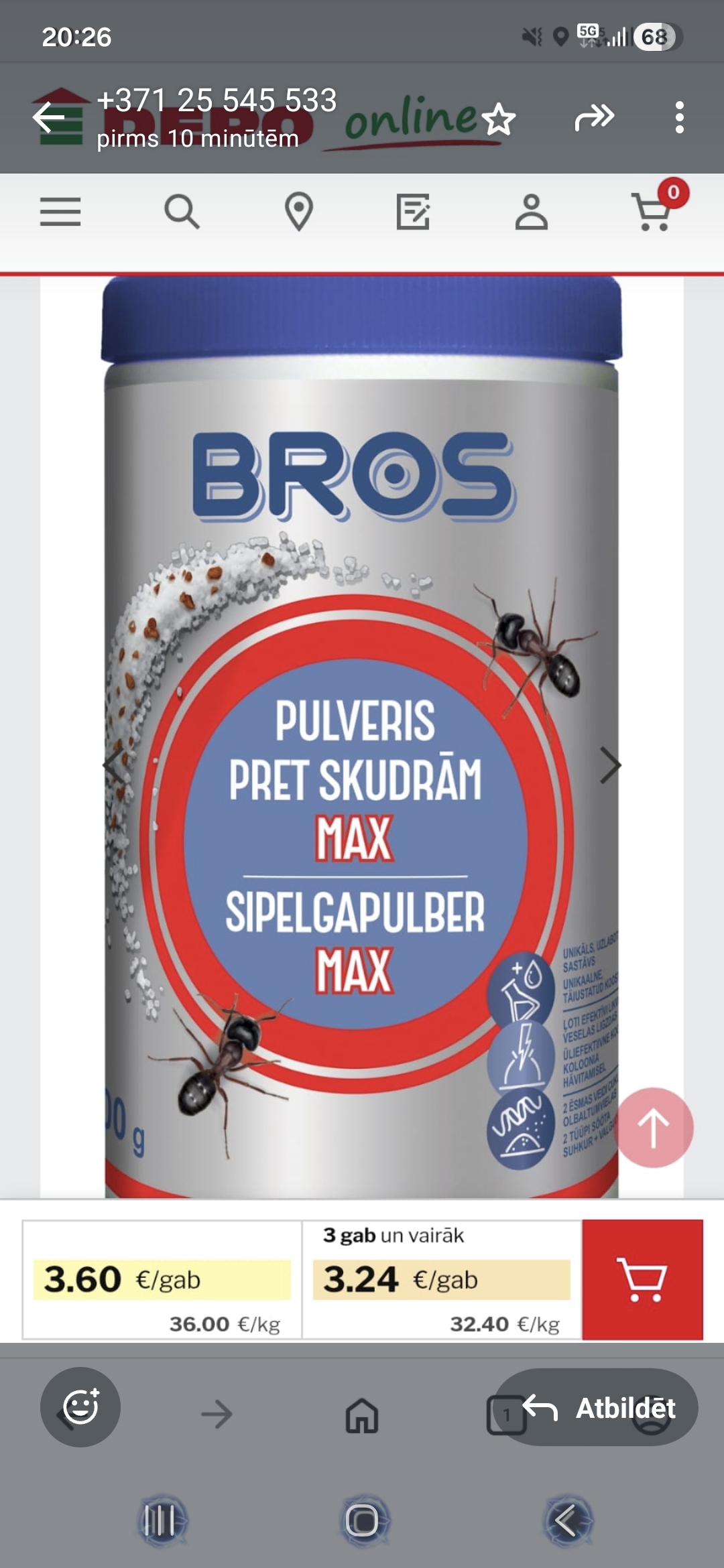
Pulveris pret skudrām MAX (100g)
BROS
- Active: Fast-acting contact powder (pyrethroid-class — standard for this product line)
- Price: €3.60 (or €3.24 each in packs of three)
- Bought at: Depo (Latvia)
- 100g pot of fine powder, sprinkled along the foundation and onto the mounds. BROS is a Polish brand sold across the Baltics — the Estonian label on the same can reads 'Sipelgapulber MAX'.
How I applied it
The instructions were simple: sprinkle a thin line where the ants are active, don't water it in for the first few hours, repeat after a week if needed.
- Day 0 (evening) — walked the foundation and laid a thin line of powder. The 100g pot covers ~30 metres if you don't overdo it. Added a small pile directly on the two visible mounds.
- Day 0–3 — left it alone, dry weather helped.
- Day 4 — light rain, so I re-applied a little onto the mounds still showing activity. Picked up a second pot.
The whole job was about 20 minutes.
What happened
Day 0
Application
Powder laid down along the foundation and on the visible mounds. Within an hour ants were already walking through it — pyrethroid powders work on contact, so this was the part where the workers carry it back to the colony on their bodies.Day 3
Mounds still active
Visible activity reduced but not gone. The two original mounds were quieter; the line on the kitchen step was thinner. I'd expected this — even a contact poison needs the workers to walk through it repeatedly and carry it home.Day 7
Most activity gone
The two original mounds were inactive. No new ants on the kitchen step in three days. Granules still visible in places — the colony is clearly down significantly but I can see they haven't all stopped.Day 14
Holding
Ants are not gone — I still see one or two on the patio occasionally — but the mounds are gone, the trails are gone, and they're no longer coming into the kitchen step. From swarm to ones-and-twos in two weeks.
The verdict
It worked — and I won't oversell it. The mounds went, the trails into the house went, the colony is clearly broken. I still see the occasional ant on the patio two weeks on — they're not extinct, just under control. That's exactly the outcome I wanted: ants out of the wall and the coldframe, but the garden still has its ants doing their job.
Would I use it again: yes — this autumn before they overwinter, and next spring as a preventive pass.
The honest caveat: this is one product, one ant species, one situation. A contact powder is great for outdoor nests and foundations. It is not the right tool for ants already trooping across your kitchen counter (that's a job for bait), and it won't touch carpenter ants doing structural damage (that's a job for a professional).
That caveat is the whole reason for the rest of this guide.
What kills ants — every method ranked honestly
Here's the full toolbox of what actually kills ants (and what just annoys them). The table is the fast version; the detail follows.
| Method | Best for | Kills the colony? | Speed | Cost |
|---|---|---|---|---|
| Contact powder | Outdoor nests, foundations | Yes | A few days | Low |
| Bait / gel station | Ants indoors, trails | Yes | A few days | Low |
| Boiling water | A visible, reachable nest | Sometimes | Instant | Free |
| Diatomaceous earth | Dry spots, around food crops | Yes (slow) | Slow | Low |
| Borax + sugar (DIY) | Indoor or outdoor trails | Yes | Slow | Very low |
| Nematodes | Lawns and beds | Relocates the nest | Weeks | Medium |
| Vinegar / cinnamon | Clearing a counter short-term | No | n/a | Very low |
| Spray / ant poison | Instant visible kill only | No | Instant | Low |
The one rule behind the whole table: anything the ants carry back to the nest (bait, contact powder) ends the colony; anything that only kills the ants you see (spray, vinegar, boiling water on a deep nest) doesn't.
Now the detail, with where each one belongs.
1. Contact powder / granular bait — best for outdoor nests & foundations
A contact ant powder is the most reliable way to clear an outdoor nest or foundation trail — it's what worked for me. You sprinkle it along the ant highways and on the nest; the ants walk through it and carry it home, which reaches the colony. Cheap and long-lasting. Downside: not for indoor food-prep areas, and rain washes it off (reapply).
2. Bait stations / gel bait — best for indoors and trails
The ants carry sweet or protein bait back to the nest and it kills the colony over a few days. Counterintuitive but important: don't kill the ants you see at the bait — you want them to walk away with it. Best tool for indoor ant lines. Boric-acid/borax baits fall in this category.
3. Boiling water — best for a nest you can see, free, instant
Pour a kettle of boiling water straight into the nest opening. Kills on contact, costs nothing. Works best on smaller, accessible mounds; large or deep nests survive because the water doesn't reach the queen. Repeat over several days. (Keep it away from plant roots you care about.)
4. Diatomaceous earth — natural, slower, weather-sensitive
A fine fossil powder that physically damages insects' exoskeletons. Genuinely works on contact and is non-toxic to use around food growing — but only while it stays bone dry, so it's frustrating outdoors in a wet climate. I'm planning to test this one properly as a chemical-free alternative.
5. Borax + sugar DIY bait — cheap and effective if you're patient
Mix borax with sugar water (roughly 1 part borax to 3 parts sugar, dissolved) on cotton wool in a shallow lid. The sugar carries the borax into the colony. Cheap, effective, but slow — and keep it away from pets and children.
6. Nematodes — biological, for lawns and beds
Beneficial nematodes (microscopic worms) watered into the soil will drive ant colonies to relocate. Best for getting ants out of a lawn or bed without chemicals. More expensive and finicky, but the most "garden-friendly" option. On my list to try.
7. Natural ant repellents (vinegar, cinnamon, citrus, coffee grounds) — overrated as a solution
These disrupt the scent trails ants follow, so they'll discourage ants from one spot for a while. Useful to keep ants off a counter today. But they don't kill the colony — the ants just reroute. Treat these as a temporary patch, not a fix. The internet wildly oversells them.
Does vinegar kill ants?
Short answer: not really. A 50/50 white-vinegar-and-water spray will kill a few ants on direct contact and — more usefully — wipes out the invisible scent trail the others are following, so they lose the path for a while. But it does nothing to the nest or the queen, so the colony simply reroutes and returns. Vinegar is a genuinely handy way to clear ants off a kitchen counter right now; it is not a way to get rid of ants for good. Same goes for cinnamon, lemon juice, and coffee grounds — scent disruptors, not killers.
8. Sprays and ant poison — fast but shallow
Contact sprays and aerosol ant poison kill the ants they hit instantly, which feels satisfying and does nothing to the nest. The colony refills the trail within a day. I avoid them, especially near edibles. Fine for a one-off line of ants you want gone right now, useless for the actual problem — for that you want a bait the ants carry home.
How to get rid of ants in the house (vs in the garden)
This trips people up, so it's worth being clear — getting rid of ants in the house is a different job from treating the garden:
- Ants outdoors (nests, mounds, foundation trails): treat the nest. Contact powder, boiling water, or nematodes. This is what my field test covers.
- Ants in the house (a line across the floor or counter): the ants you see indoors are scouts from an outdoor colony. Killing them does nothing. Use bait so they carry it home, seal the entry crack they're using, and wipe the trail with soapy water or vinegar to erase the scent. Treating the ants in the house without addressing the outdoor colony is endless — you have to do both.
How to get rid of ants permanently (prevention)
Getting rid of them once is only half the job — getting rid of ants permanently is about denying the colony a reason to come back:
- Seal entry points — caulk the cracks and gaps where they get in
- Erase scent trails — wipe with diluted vinegar or soapy water so followers lose the path
- Remove the food — sealed containers, no crumbs, no sticky jar rims, lids on bins
- Move nesting encouragement away from the wall — firewood, mulch piles, and damp debris against the house invite nests
- A preventive powder pass in early spring — before the mounds appear, which is my plan for next year
When to call a professional
Most ant problems are DIY. Call a pro when:
- You see carpenter ants (large, often around damp wood) — they can cause structural damage
- The infestation is inside walls or recurring no matter what you do
- It's a commercial kitchen or food-prep setting with hygiene rules
There's no shame in it — some situations are beyond a pot of powder.
What I'd skip
- Spraying the visible ants and feeling like you solved it — you didn't
- Relying on cinnamon/vinegar alone for an actual infestation
- Ultrasonic "pest repeller" plug-ins — no credible evidence they do anything to ants
- Nuking every ant in the garden — you want the garden ants; just not in the wall
FAQ
What's the fastest way to get rid of ants? Boiling water into a visible nest is instant and free, but for lasting control you need a bait or powder the workers carry back to the queen — that takes a few days but actually ends the colony.
Does ant powder actually work? Yes, for outdoor nests and foundations — in my test it cleared the mounds and trails within about a week. Apply where they travel and don't water it in for the first few hours.
Do vinegar and cinnamon work? They disrupt scent trails and discourage ants from a spot temporarily, but they don't kill the colony. Good for a counter today, not for an infestation.
How do I stop ants coming inside? Seal the entry cracks, wipe the trails, seal food — and treat the nest outside, not just the scouts you see indoors.
Are garden ants bad? Mostly not — they aerate soil and eat pests. Only treat nests that undermine the house, get indoors, or farm aphids.
Update log
This is a living article — I update it as I test more methods through the seasons:
- May 2026 — first published after the BROS powder field test cleared the foundation mounds. Later expanded into a full method guide with a comparison table, step-by-step, and FAQ.
(Diatomaceous earth, nematodes, and a preventive early-spring pass are queued — I'll add results here as I run them.)
What this article is not
This is not professional pest-control advice — it's one gardener's real experience plus an honest survey of the options. For structural carpenter-ant damage or a serious indoor infestation, call a professional.
More from the garden:
- Building the new beds — May 2026 — what was happening in the garden when the ants arrived
- Starting a lawn over an old potato patch — the other thing eating my May
Related on the site
Keep reading
More on gardening

Why Is My Grass Not Growing? How to Fix a Slow, Patchy New Lawn
New grass coming up thin or patchy? Here are the real reasons grass seed fails to grow, diagnosed from my own slow lawn, plus how to fix each one.
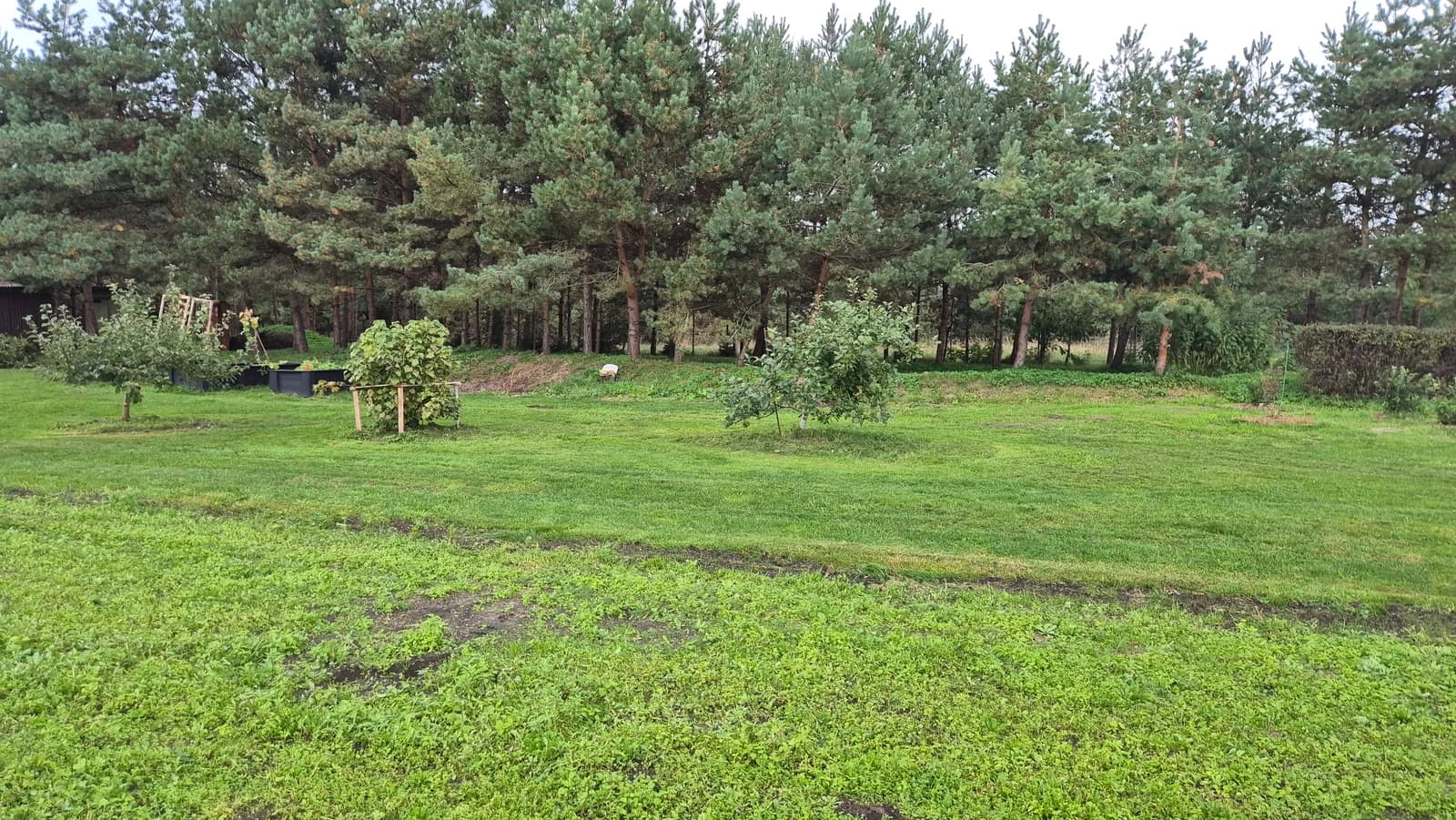
Replacing a Potato Patch With Lawn: Our Decision and What to Plan
We decided to stop growing potatoes after a disappointing harvest. Here's how we're planning grass, raised beds and a greenhouse in that space, plus the preparation and watering questions to settle before sowing a former vegetable plot.

What is the best fertilizer for roses?
The best fertilizer for roses comes down to nitrogen, phosphorus, and potassium balance. Here's what each nutrient does and how to pick the right feed.