How to Plant Grass Seed: Timing, Soil Preparation and Watering
To plant grass seed, choose a suitable sowing window, prepare the soil, spread the seed evenly and keep the young seedlings from drying out. The watering routine during germination differs from care for an established lawn.
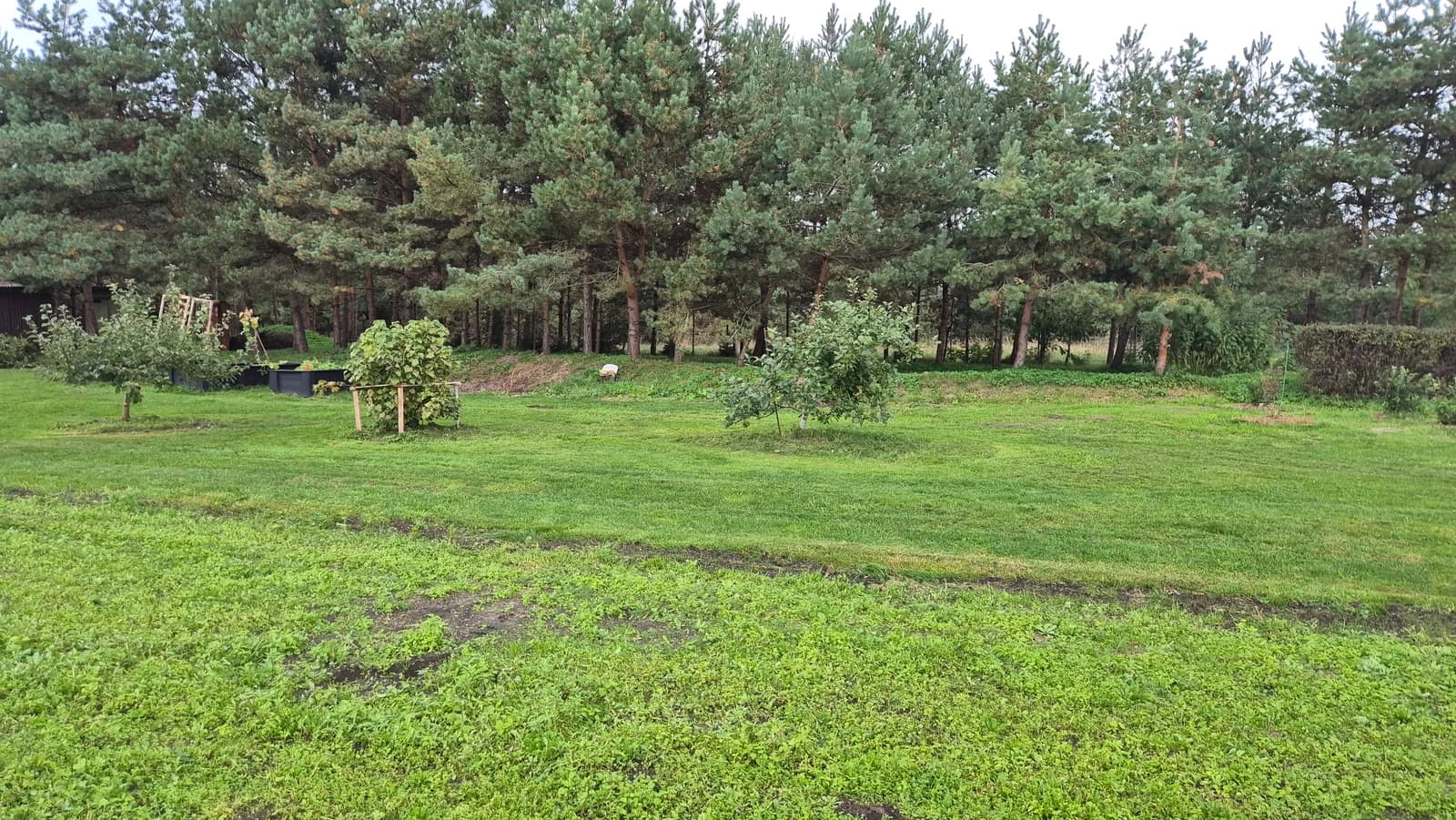
Our own lawn project in Latvia turned out well by the end of the first season. That result is encouraging as we plan to establish grass in the area where we harvested our last potatoes this year. The practical steps below are general guidance; our experience is recorded in the potato-patch lawn article.
Choose the season and seed mix
For cool-season lawns, aim for conditions that let seedlings establish without extreme heat or approaching hard frosts. The RHS guide to lawns from seed favours early autumn or mid-spring. Those UK calendar dates need adapting to local weather in a colder climate such as Latvia.
Check the seed packet for the intended conditions and sowing rate. A lawn used by children or walked across regularly has different demands from an ornamental lawn, while shade changes which grasses suit the site. The RHS distinguishes general-purpose, fine and shade-tolerant mixtures.
Prepare a seedbed before sowing
Remove persistent weeds, stones and unwanted crop regrowth. Deal with compacted ground, then allow disturbed soil to settle before finishing a level, firm surface. Lightly rake the top into a fine texture. These preparation steps are set out in the RHS sowing guide.
At a former vegetable plot, look beyond the surface appearance. Remaining crops and weeds can grow again, while hollows may become clearer after the ground settles. Our old potato ground made this preparation question a real part of the project.
Spread seed evenly
Measure the area so you can use the packet's recommended amount. Split the seed into two portions and sow across the area in two directions, then lightly rake it into the surface. The University of Minnesota's lawn establishment guide describes this approach and the importance of seed-to-soil contact.
Doing this with a measured quantity also gives you a useful record for any later repairs. Keep the seed label and note the sowing date.
Water for germination first
Freshly sown grass needs gentle watering that keeps the seedbed moist without washing seed away. During dry weather, young seedlings need regular attention. As roots develop, watering can become less frequent. Minnesota Extension's establishment advice makes this change between the early and later stages clear.
At a weekend property, think through how the seedbed will get that attention between visits. Rain may help, but it isn't a watering schedule you can guarantee. If you can't provide frequent care, the sowing window and available help become part of the plan.
Wait before treating it as a finished lawn
An area that looks green isn't necessarily ready for regular use. The RHS recommends limiting traffic on newly seeded lawns. Its first-cut guidance is to start gently, removing about a third of the grass height with sharp blades.
Check how firmly the plants have established and follow the guidance for your seed mix before increasing mowing or use. This matters whether the future mower will be pushed, ridden or robotic.
Seed and turf are different projects
Seed is generally cheaper and offers more mixture choices, but takes time to become a usable lawn. Turf gives faster cover at a higher cost. Both need prepared soil. Minnesota Extension compares the two methods and explains that new turf must stay moist while it roots.
Decide which method you're using before following a care routine. Advice about rolling laid turf or testing its roots isn't a step in sowing grass seed.
Our next lawn project
We were satisfied with the lawn at the end of this first season. We're now changing another part of the garden after deciding to stop growing potatoes. That area will contain grass, the raised beds and a new greenhouse. A robot mower is on the wish list for 2027.
Related reading
Keep reading
More on gardening

Why Is My Grass Not Growing? How to Fix a Slow, Patchy New Lawn
New grass coming up thin or patchy? Here are the real reasons grass seed fails to grow, diagnosed from my own slow lawn, plus how to fix each one.
Replacing a Potato Patch With Lawn: Our Decision and What to Plan
We decided to stop growing potatoes after a disappointing harvest. Here's how we're planning grass, raised beds and a greenhouse in that space, plus the preparation and watering questions to settle before sowing a former vegetable plot.

How to Get Rid of Ants Around the House: Every Method, Tested and Ranked
How to get rid of ants around the house and garden, ranked honestly: the contact powder that cleared my foundation in a week, plus what actually kills the colony.